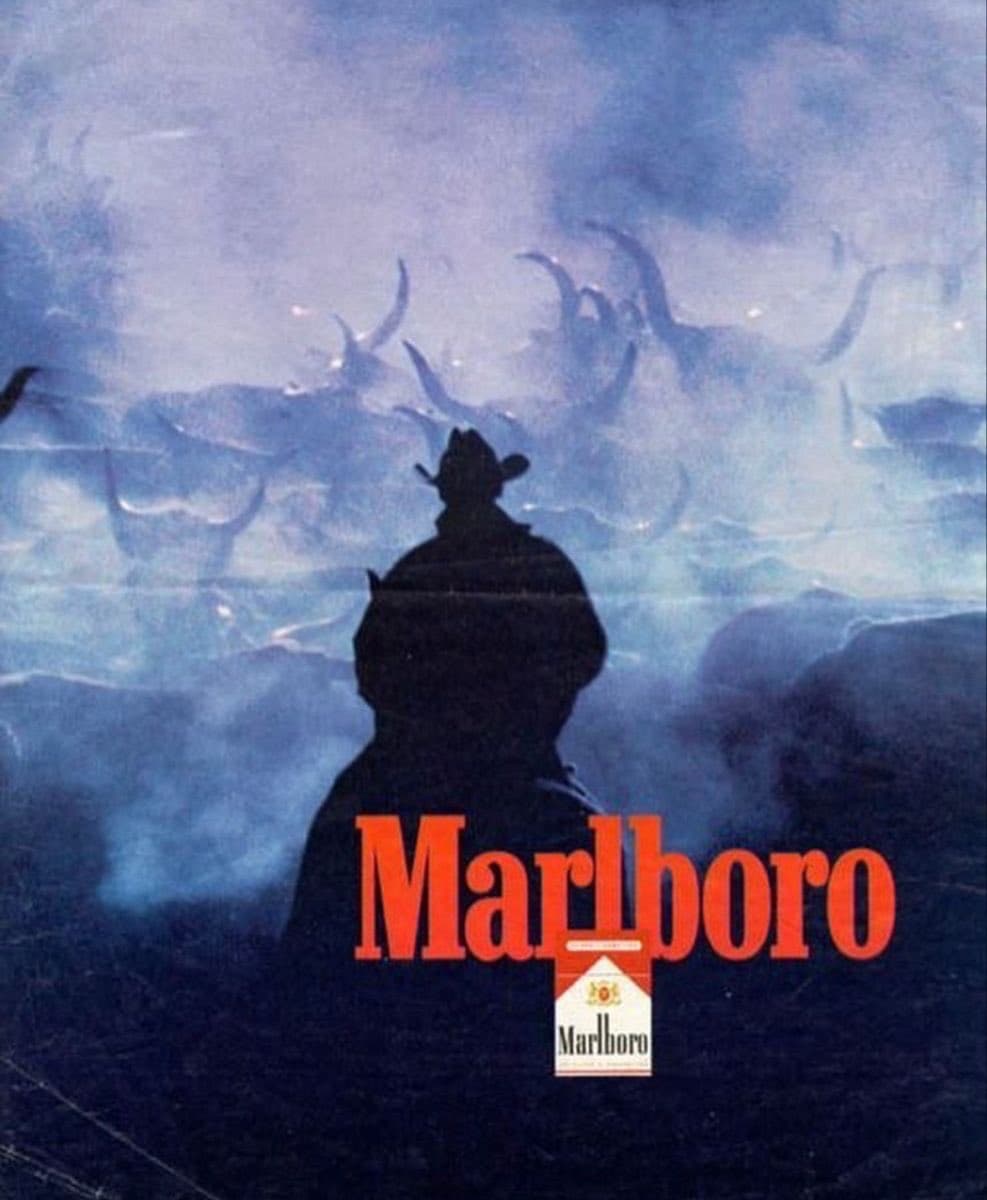
Marlboro Cowboy I
Vintage Impact
The masculine archetype as an instant identity shortcut.
Modern Lens
Classic case of belonging narrative through gender codes.
Context & Narrative
The iconography connects to the Marlboro Man archetype, an advertising concept launched in 1954 by Leo Burnett. The piece displays the cowboy archetype visual codes associated with Marlboro. The brand is identifiable in the local asset. The cowboy creative family sustained the brand's positioning for decades in the 20th century. The Marlboro Man, created by Leo Burnett in 1954, is the most successful branding experiment of the 20th century: it transformed a filtered cigarette — perceived as feminine — into the ultimate symbol of American masculinity. The cowboy doesn't sell tobacco; he sells an archetype of independence that millions of men purchased as a portable identity. The piece doesn't show a real ranch but a mythological setting where every man is his own boss. The deep desire is absolute autonomy: answering to no one, depending on no one, being the horizon itself.